Intertrochanteric Fracture – Dr. Vinit Oswal | Expert
Orthopaedic Doctor in Bengaluru
Dr. Vinit Oswal, a highly skilled Orthopaedic Surgeon at
Spire Clinic, Bengaluru, specializes in the surgical management of
intertrochanteric fractures of the hip. Using advanced fixation
techniques
such as DHS (Dynamic Hip Screw) and PFN (Proximal Femoral
Nail),
he ensures stable fixation, quicker rehabilitation, and excellent long-term outcomes for
patients.
What is an Intertrochanteric Fracture?
An intertrochanteric fracture is a type of hip fracture that occurs between the greater
and lesser
trochanters of the femur (upper thigh bone). It is most common in elderly patients with
osteoporosis
but can also occur in younger individuals following high-energy trauma such as road
accidents or falls.
When should you seek treatment for an Intertrochanteric Fracture?
- Severe pain in the hip or groin after a fall
- Inability to stand, walk, or bear weight on the affected leg
- Shortened or externally rotated leg
- Swelling, bruising, or deformity around the hip
- Persistent pain in elderly patients after minor trauma
How is an Intertrochanteric Fracture Treated?
Most intertrochanteric fractures require surgical fixation to allow early mobilization
and prevent complications.
The two most common techniques include:
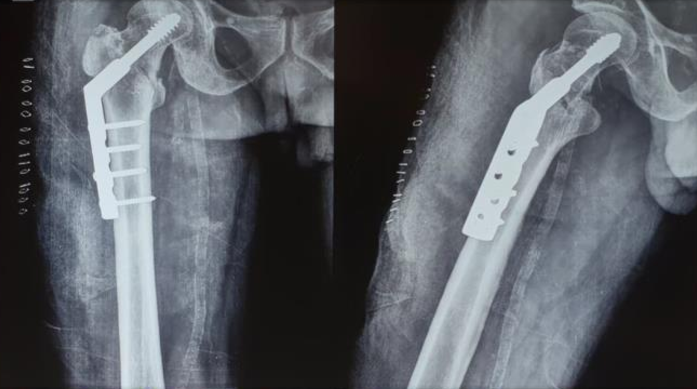
- DHS (Dynamic Hip Screw) – A plate and screw system used to fix
stable fractures,
allowing controlled compression at the fracture site for bone healing.
- PFN (Proximal Femoral Nail) – An intramedullary nail inserted into
the femoral canal,
ideal for unstable or complex fractures. Provides strong fixation, early
mobilization, and reduced implant failure.
How is the Surgery Done?
- Performed under spinal or general anaesthesia
- Small incisions are made over the hip region
- Fracture is reduced (aligned) under X-ray guidance
- DHS plate/screw or PFN nail is inserted and fixed for stabilization
- Surgery usually takes 1–2 hours
- Early mobilization is encouraged post-surgery to prevent complications
What Care is Necessary After Surgery?
- Hospital stay is usually 5–7 days
- Physiotherapy begins within 48 hours to restore movement
- Walking aids (walker or crutches) are used initially
- Recovery period: 8–12 weeks for most patients
- Balanced diet with calcium and vitamin D supplements for bone healing
- Regular follow-ups and X-rays to monitor fracture healing
Rehabilitation plays a crucial role in regaining independence after hip fracture
surgery.
Early mobilization reduces the risk of bed sores, pneumonia, and blood clots in elderly
patients.
Risks & Complications
- Infection at the surgical site
- Implant failure or screw cut-out (rare with PFN/DHS)
- Delayed or non-union of the fracture
- Shortening or deformity if not properly treated
- Deep vein thrombosis (DVT) or pulmonary embolism
Advantages of DHS/PFN Fixation
- Stable fixation allowing early walking
- Reduced risk of complications compared to non-surgical treatment
- PFN offers excellent results for unstable or osteoporotic fractures
- DHS remains a reliable choice for stable intertrochanteric
fractures
- Improved quality of life with faster rehabilitation
Book Your Appointment
For additional information on Intertrochanteric Fracture treatment, or
to have your hip injury evaluated, please call
+91 6364329177 – Dr. Vinit Oswal, Expert
Orthopaedic Doctor in Bengaluru, serving patients at Spire Clinic and across Bangalore
City.






.png)
.png)
.png)


.png)
.png)
.png)