Meniscus Injury & Treatment – Dr. Vinit Oswal | Expert
Orthopaedic Doctor in Bengaluru
Dr. Vinit Oswal, an experienced Orthopaedic Surgeon at
Spire Clinic, Bengaluru, specializes in the management of
meniscus injuries. With expertise in both conservative care and
advanced arthroscopic surgery,
he provides personalized treatment to restore knee stability, relieve pain, and help
patients return to active lifestyles.
What is a Meniscus Injury?
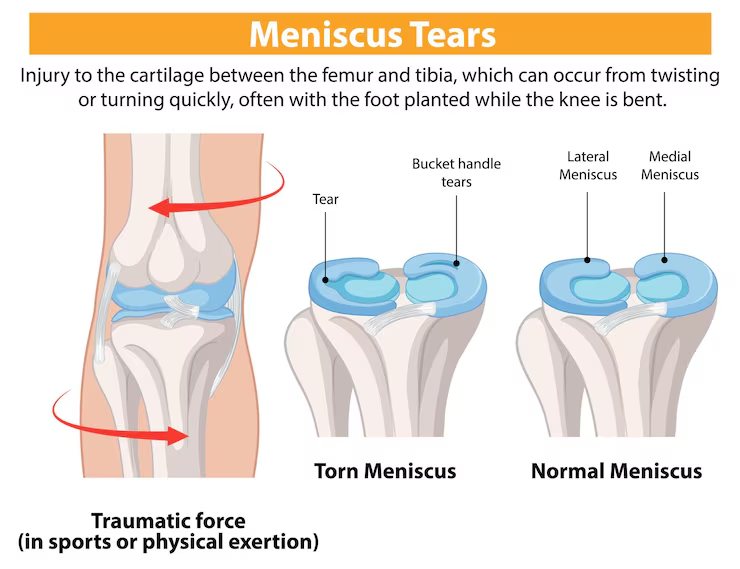
The meniscus is a C-shaped piece of cartilage in the knee that acts as a cushion between
the thigh bone (femur)
and shin bone (tibia). A meniscus tear often occurs due to twisting, sports injuries, or
age-related degeneration.
Symptoms include knee pain, swelling, locking, and difficulty moving the joint.
When should you seek treatment for a Meniscus Tear?
- Persistent knee pain and swelling after activity or injury
- Clicking, locking, or catching sensation in the knee
- Difficulty straightening or bending the knee fully
- Instability or weakness in the knee joint
- Recurrent swelling despite rest and medications
How is a Meniscus Tear Treated?
- Conservative Management – Rest, ice, compression, elevation (RICE),
medications, and physiotherapy for small/stable tears.
- Arthroscopic Meniscus Repair – Suturing the torn meniscus to allow
healing (best for younger patients and fresh tears).
- Partial Meniscectomy – Removing the damaged portion of the meniscus
when repair is not possible.
- Meniscus Transplant – In rare cases, donor grafts may be used if
meniscus tissue is severely damaged.
- Treatment choice depends on patient age, activity level, tear location, and
severity.
How is Arthroscopic Meniscus Surgery Done?
- Performed under spinal or general anaesthesia
- Tiny incisions are made around the knee
- An arthroscope (camera) is inserted for visualization
- Specialized instruments repair or trim the torn meniscus
- The procedure usually lasts 30–60 minutes
- Patients are often discharged the same day
What Care is Necessary After Meniscus Surgery?
- Use of crutches or braces for support in the early phase
- Weight-bearing is gradually increased depending on repair or meniscectomy
- Physiotherapy begins within a few days to restore motion and strength
- Recovery timeline: 4–6 weeks for meniscectomy, 3–4
months for meniscus repair
- Pain medications and anti-inflammatory drugs as prescribed
Adherence to the rehabilitation program is essential to regain full function. Athletes
can usually return to sports after complete healing and strength restoration.
Risks & Complications
- Infection (rare)
- Knee stiffness or swelling
- Failure of meniscus repair (requiring re-surgery)
- Degenerative arthritis in long-standing or untreated cases
Advantages of Meniscus Surgery
- Minimally invasive with small incisions
- Pain relief and restored knee function
- Faster recovery compared to open procedures
- Preservation of knee cartilage and prevention of arthritis (in
repair cases)
- Safe outpatient procedure with quick return to daily activities
Book Your Appointment
For additional information on Meniscus Injury & Treatment, or to have
your knee pain evaluated, please call
+91 6364329177 – Dr. Vinit Oswal, Expert
Orthopaedic Doctor in Bengaluru,
serving patients at Spire Clinic and across Bangalore City.






.png)
.png)
.png)


.png)
.png)
.png)