Shoulder Fracture – Dr. Vinit Oswal | Expert Orthopaedic Doctor
in Bengaluru
Dr. Vinit Oswal, an experienced Orthopaedic Surgeon at
Spire Clinic, Bengaluru, specializes in diagnosing and treating
shoulder fractures. From simple cracks to complex multi-part breaks,
he provides individualized surgical and non-surgical care to restore shoulder function,
relieve pain, and prevent long-term stiffness.
What is a Shoulder Fracture?
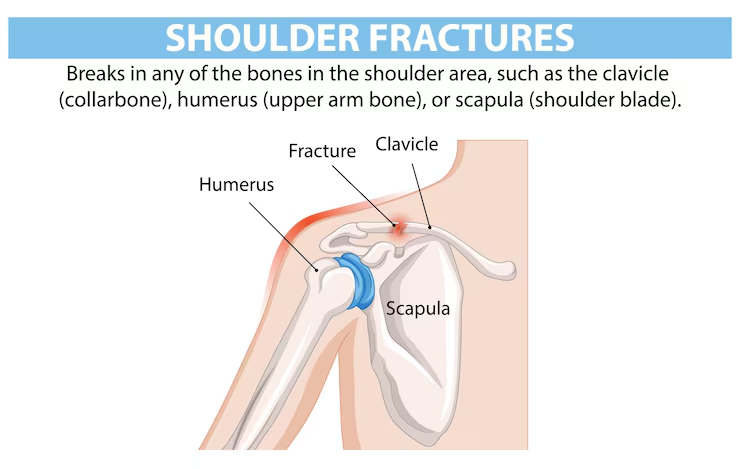
A shoulder fracture is a break in one of the bones forming the shoulder joint — most
commonly the proximal humerus (upper arm bone), the clavicle (collarbone), or
the scapula (shoulder blade). These injuries are typically caused by falls, road
accidents, or sports trauma and require timely evaluation to ensure proper healing and
function.
Types of Shoulder Fracture
- Proximal Humerus Fracture – Break near the top of the upper arm
bone.
- Clavicle (Collarbone) Fracture – Common after falls or direct
blows.
- Scapula (Shoulder Blade) Fracture – Less common, often due to
high-energy trauma.
- Displaced / Non-displaced – Bones out of position vs. aligned.
- Comminuted – Bone shattered into multiple pieces.
When should you seek medical care for a Shoulder Fracture?
- Severe shoulder pain, swelling, or bruising after an injury
- Visible deformity, drooping shoulder, or grinding sensation
- Restricted arm movement or inability to lift the arm
- Numbness or tingling in the arm or hand
- Open wound or bone visible through the skin
How is a Shoulder Fracture Treated?
- Immobilization – Sling or brace for stable, non-displaced
fractures.
- Closed Reduction – Gentle realignment without surgery when
appropriate.
- Open Reduction & Internal Fixation (ORIF) – Plates, screws, or
wires to stabilize displaced fractures.
- Intramedullary Nailing – Rods within the bone for certain humerus
fractures.
- Shoulder Replacement – Hemiarthroplasty or reverse shoulder
arthroplasty for complex proximal humerus fractures in selected patients.
- Treatment choice depends on fracture pattern, displacement, bone quality, age, and
activity level.
What Care is Necessary After a Shoulder Fracture?
- Short-term rest in a sling followed by guided physiotherapy
- Pain control and swelling reduction (ice, elevation as advised)
- Early passive motion to prevent stiffness, progressing to strengthening
- Healing time typically 6–12 weeks, longer for complex injuries
- Calcium/vitamin D rich diet and fall-prevention strategies
Adherence to rehabilitation protocols is crucial to regain range of motion and shoulder
strength. Regular follow-ups with X-rays help track bone healing and implant position
when surgery is performed.
What are the Risks & Complications?
- Shoulder stiffness or frozen shoulder
- Improper healing (malunion/non-union)
- Nerve or vessel injury (rare)
- Hardware irritation after fixation (occasionally requires removal)
- Post-traumatic arthritis in complex intra-articular fractures
What are Some Advantages of Early Shoulder Fracture Treatment?
- Better alignment and faster bone healing
- Lower risk of stiffness and chronic pain
- Improved shoulder function for lifting, reaching, and daily tasks
- Reduced chance of long-term disability
- Quicker return to work and sports with structured rehab
Book Your Appointment
For additional information on Shoulder Fracture treatment, or to have
your
shoulder injury evaluated, please call
+91 6364329177 – Dr. Vinit Oswal, Expert
Orthopaedic Doctor in Bengaluru, serving patients at Spire Clinic and across Bangalore
City.






.png)
.png)
.png)


.png)
.png)
.png)