Wrist Fracture – Dr. Vinit Oswal | Expert Orthopaedic Doctor in
Bengaluru
Dr. Vinit Oswal, an expert Orthopaedic Surgeon at
Spire Clinic, Bengaluru, specializes in the diagnosis and treatment of
wrist fractures. With advanced skills in both surgical and non-surgical
management,
he ensures proper bone alignment, quick recovery, and restoration of wrist strength and
function.
What is a Wrist Fracture?
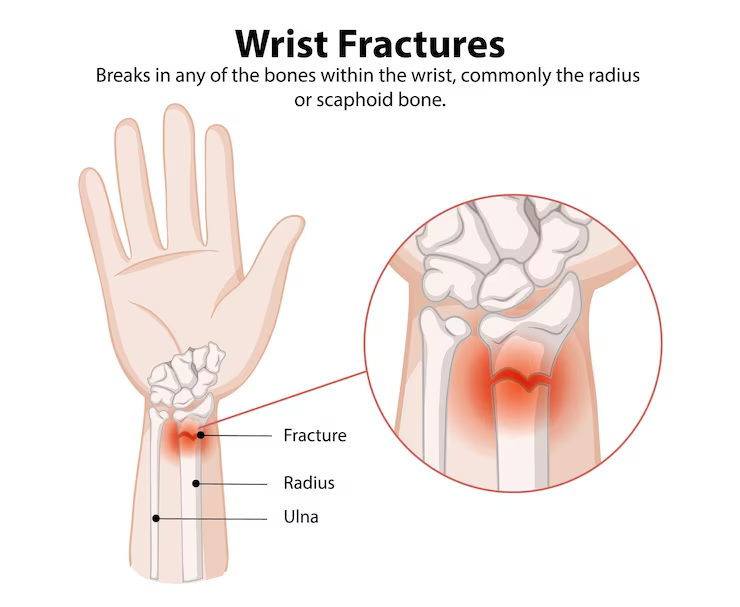
A wrist fracture refers to a break in one or more of the small bones in the wrist, most
often
the radius bone (distal radius fracture). It usually occurs from falls on an
outstretched hand,
sports injuries, or road accidents. Wrist fractures can range from simple hairline
cracks to
complex breaks involving multiple bones and joints.
Types of Wrist Fracture
- Distal Radius Fracture – Most common type, break at the end of the
radius bone near the wrist.
- Colles’ Fracture – A type of distal radius fracture where the wrist
is displaced backward.
- Smith’s Fracture – A break where the wrist is displaced forward.
- Scaphoid Fracture – Break in one of the small wrist bones, often
due to falls.
- Comminuted Fracture – Bone shatters into multiple pieces.
When should you seek medical care for a Wrist Fracture?
- Severe pain, swelling, or bruising around the wrist
- Difficulty or inability to move the wrist or hand
- Visible deformity or crooked appearance of the wrist
- Numbness or tingling in the fingers
- Persistent pain after a fall or injury
How is a Wrist Fracture Treated?
- Immobilization – Casts, splints, or braces for stable fractures.
- Closed Reduction – Non-surgical realignment of displaced bones.
- Open Reduction & Internal Fixation (ORIF) – Surgery using plates,
screws, or rods to stabilize bones.
- External Fixation – External device holds bones in place for severe
fractures.
- Choice of treatment depends on fracture type, displacement, and patient’s age and
activity level.
What Care is Necessary After a Wrist Fracture?
- Keep the wrist immobilized as advised by the doctor.
- Elevate the hand and apply ice packs to reduce swelling.
- Physiotherapy is started after initial healing to restore flexibility and strength.
- Healing time usually takes 6–8 weeks, depending on severity.
- Follow a diet rich in calcium and vitamin D to support bone recovery.
Regular follow-up visits and X-rays may be required to monitor bone healing. Early
physiotherapy
ensures proper wrist movement and helps avoid stiffness or long-term weakness.
What are the Risks & Complications?
- Stiffness or reduced wrist motion
- Improper healing (malunion or non-union)
- Chronic pain or swelling
- Nerve compression or damage
- Risk of arthritis in the wrist joint after severe fractures
What are Some Advantages of Early Wrist Fracture Treatment?
- Faster recovery with proper bone alignment
- Reduced risk of permanent deformity
- Improved wrist strength and flexibility
- Lower chance of arthritis or long-term complications
- Restored daily function and pain-free hand movements
Book Your Appointment
For additional information on Wrist Fracture treatment, or to have your
injury evaluated, please call
+91 6364329177 – Dr. Vinit Oswal, Expert
Orthopaedic
Doctor in Bengaluru, serving patients at Spire Clinic and across Bangalore City.






.png)
.png)
.png)


.png)
.png)
.png)