PCL Injury & Reconstruction – Dr. Vinit Oswal | Expert
Orthopaedic Doctor in Bengaluru
Dr. Vinit Oswal, an experienced Orthopaedic Surgeon at
Spire Clinic, Bengaluru, specializes in the diagnosis and management of
PCL (Posterior Cruciate Ligament) injuries. Using evidence-based
non-surgical care and
advanced arthroscopic reconstruction techniques, he helps patients restore knee
stability, function, and confidence.
What is a PCL Injury?
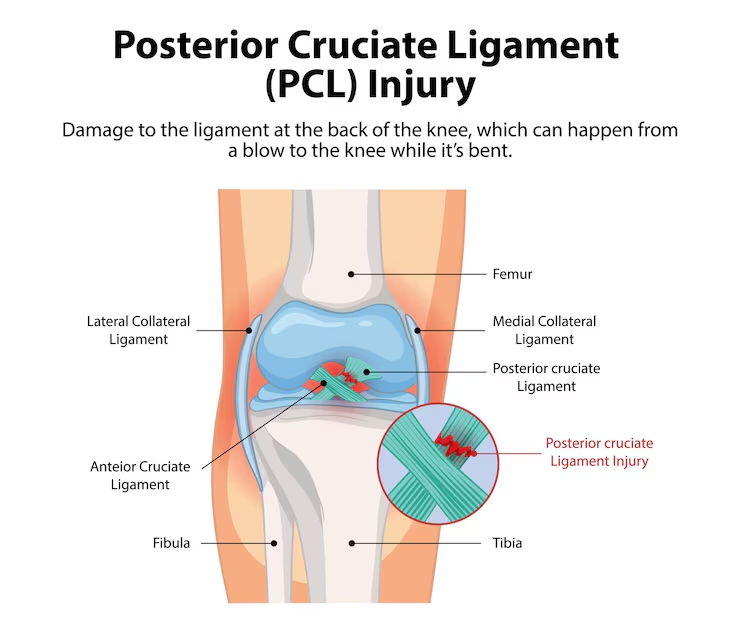
The Posterior Cruciate Ligament (PCL) is one of the main stabilizers of the knee,
preventing the tibia
(shinbone) from moving backward relative to the femur. PCL injuries usually occur from
dashboard impacts in
road accidents, falls on a bent knee, or sports trauma. Symptoms include pain, swelling,
and a feeling of
knee “giving way,” especially when walking downhill or descending stairs.
When should you seek treatment for a PCL Injury?
- Persistent knee pain and swelling after an injury
- Instability or “backward shift” sensation of the shinbone
- Difficulty with squatting, running, or descending stairs
- Combined injuries (PCL with PLC/MCL/LCL or meniscus damage)
- Failure of rest/physiotherapy to control symptoms
How is a PCL Injury Treated (Conservative & Surgical)?
- Conservative Management (Grade I–II) – Rest, ice, elevation,
activity modification,
hinged/braced support (posterior drawer-limiting brace), and focused physiotherapy
to strengthen quadriceps.
- Surgical Reconstruction (Grade III or Multi-ligament) –
Arthroscopic PCL reconstruction using
grafts (autograft hamstring/patellar tendon or allograft) to restore posterior
stability.
- Adjunct Procedures – Treatment of associated ligament or meniscal
injuries as indicated.
How is PCL Reconstruction Surgery Done?
- Performed arthroscopically via keyhole incisions under spinal or general anaesthesia
- Damaged ligament is assessed; tunnels are created in tibia and femur
- Graft (autograft/allograft) is passed and fixed with screws or suspensory devices
- Intra-operative imaging ensures anatomic placement and tensioning
- Typical duration: 1–2 hours, depending on associated repairs
What Care is Necessary After PCL Surgery?
- Protected weight-bearing with a PCL-specific brace as advised
- Early controlled range-of-motion and quadriceps activation under physiotherapist
guidance
- Avoid hamstring-dominant loading early to protect the graft
- Progressive strengthening and proprioception training over weeks
- Return to running: ~3–4 months; pivoting/contact sports:
~6–9 months (individualized)
- Pain control, swelling management, and regular follow-ups to monitor recovery
Adherence to the rehabilitation protocol is critical. A structured program focusing on
quadriceps strength
and neuromuscular control yields the best outcomes after PCL injuries.
Risks & Complications
- Infection or bleeding (rare in arthroscopic procedures)
- Knee stiffness or loss of motion
- Residual posterior laxity or graft failure
- Neurovascular injury (very rare)
- Deep vein thrombosis (DVT)
Advantages of PCL Reconstruction / Guided Rehab
- Restores posterior knee stability and function
- Reduces risk of further damage to meniscus and cartilage
- Arthroscopic technique with smaller incisions and quicker recovery
- Enables return to sport and active lifestyle
- Long-term relief from instability and pain with proper rehab
Book Your Appointment
For additional information on PCL Injury & Reconstruction, or to have
your knee evaluated, please call
+91 6364329177 – Dr. Vinit Oswal, Expert
Orthopaedic Doctor in Bengaluru,
serving patients at Spire Clinic and across Bangalore City.






.png)
.png)
.png)


.png)
.png)
.png)